Retailers have more display options at the shelf than ever before, from traditional paper labels to e-paper electronic shelf labels (ESLs) and LCD shelf displays. The right choice depends on what information needs to be shown, how often it changes, where the display will be installed, and how the solution will be managed over its lifecycle.
Paper labels can still serve stable, low-change use cases, but they rely on printing, distribution and physical replacement whenever information changes. As pricing, promotions and product content become more frequent or complex, this process can make execution slower and more difficult to keep consistent across a large store network. E-paper ESLs address many of these shelf-edge requirements through centralized digital updates, while LCD displays add value where richer graphics, animation or video are required.
Start with the Decision Criteria
A useful evaluation should begin with the operating requirement rather than the display technology. Retailers should consider update frequency, deployment scale, content richness, energy use, readability, durability, installation requirements, maintenance and total cost of ownership.
The same retailer may therefore use different formats in different parts of the store. Item-level pricing, fresh-food markdowns, detailed product information and in-store retail media do not necessarily require the same display characteristics.
Paper Labels: Simple, but More Limited as Updates Increase
Paper labels remain familiar and straightforward for information that changes infrequently, particularly where SKU volumes are limited and digital infrastructure is not required.
Their limitations become more visible when stores manage frequent price changes, promotions or assortment updates. Each change requires labels to be printed, sorted, distributed and physically replaced. At scale, this can increase the time required for execution and create opportunities for labels to be updated late, placed incorrectly or left outdated.
Paper is also inherently static. Fixed QR codes and printed promotional messages can support simple shopper communication, but changing the content requires another physical replacement cycle. For retailers seeking more centralized and responsive shelf communication, these constraints are important to consider.
E-Paper Electronic Shelf Labels: Built for Scalable Shelf-Edge Updates
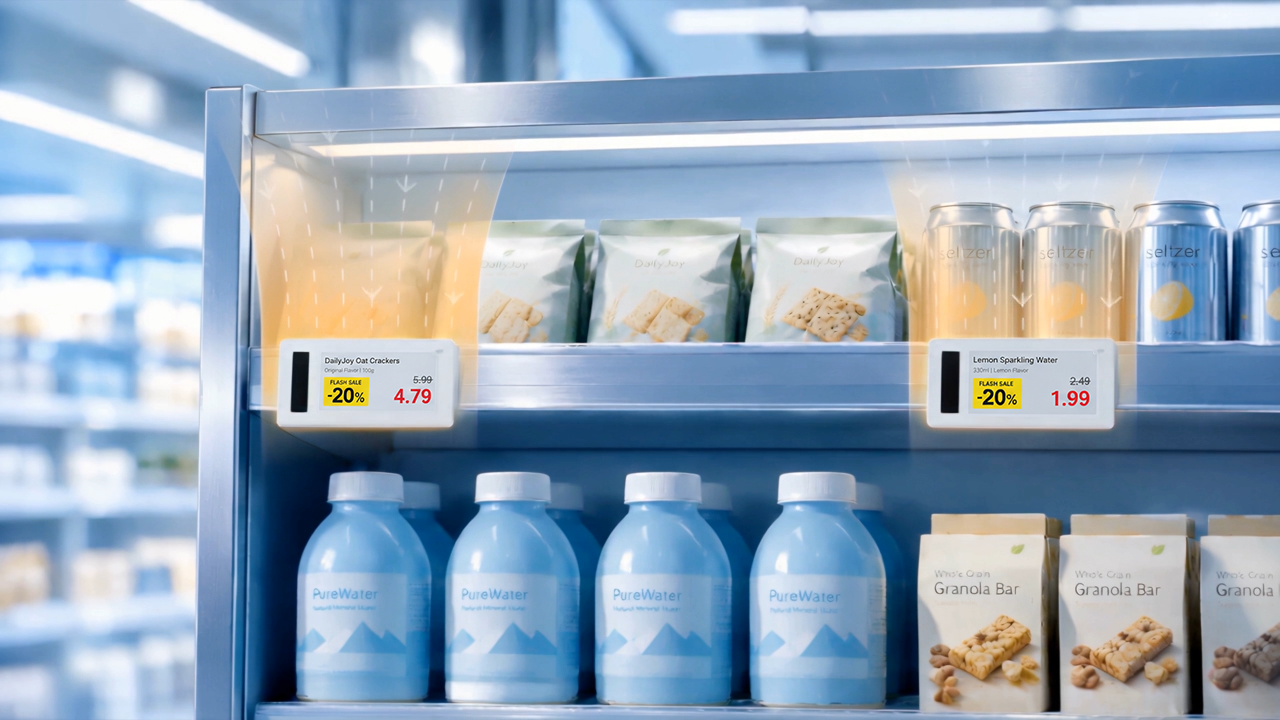
E-paper ESLs are particularly well suited to item-level pricing, promotions and product information across large numbers of SKUs. When integrated with existing pricing, POS, promotion or product-information systems, approved content can be distributed centrally to the shelf and update status can be monitored.
This makes e-paper ESLs useful in environments where information changes regularly but continuous power is not practical at every shelf position. Their compact format and readability also make them appropriate for shelf-edge applications where shoppers need clear product and pricing information.
Beyond price, ESLs can support product attributes, specifications, icons and product-specific QR codes. Their role is therefore broader than replacing a printed price tag: they can provide a managed digital endpoint for current shelf-level information.
LCD Shelf Displays: Richer Content for Selected Store Zones
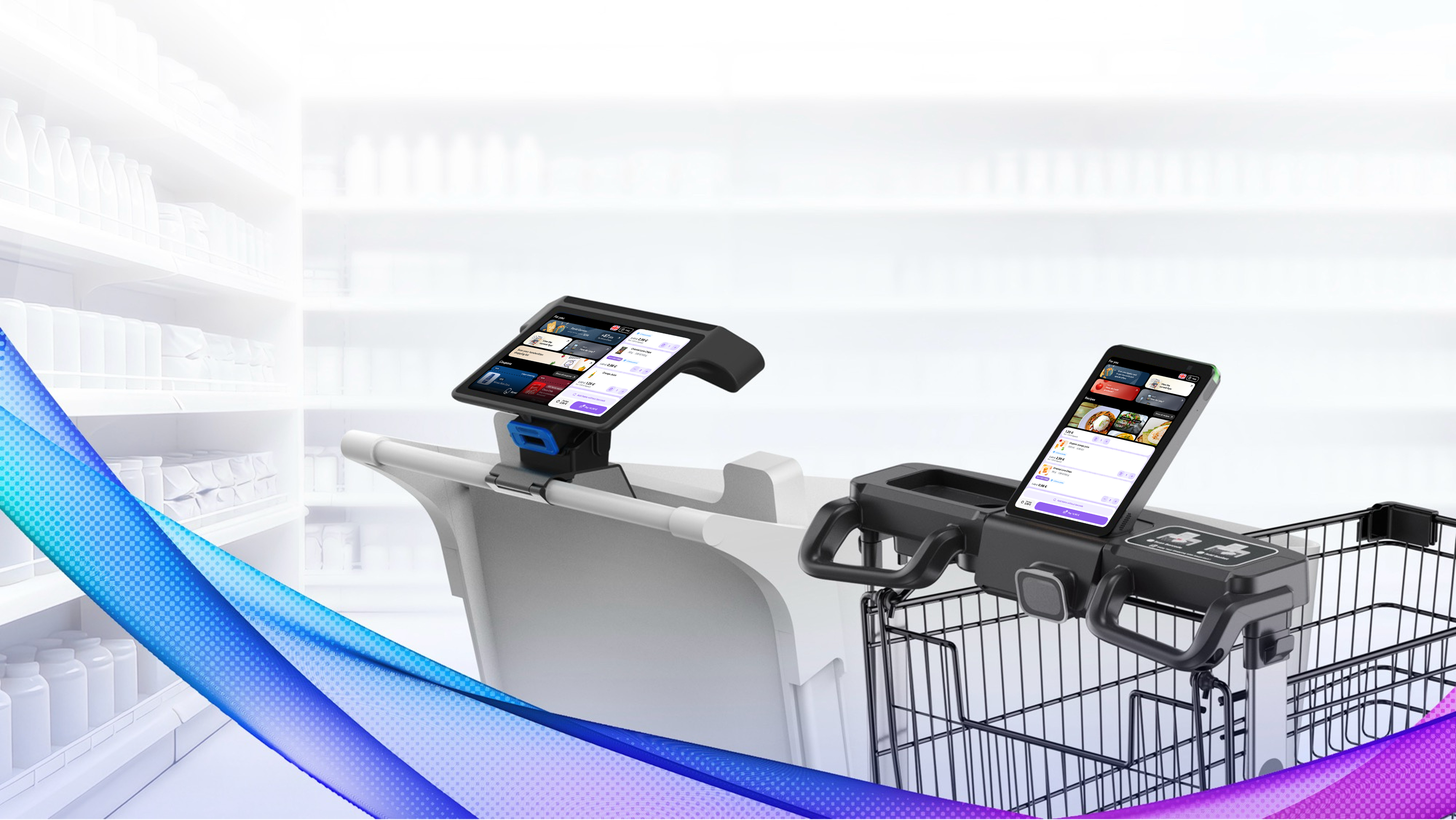
LCD displays serve a different purpose. They are better suited to locations where retailers want larger layouts, full-color graphics, animation, video, product demonstrations or scheduled retail media campaigns.
This makes LCD especially relevant for selected promotional areas, service counters and other locations where richer visual communication can add value. For large-scale item-level pricing, however, continuous power, installation, network bandwidth and content-management requirements generally make LCD a different deployment proposition from e-paper ESLs.
For retailers combining e-paper ESLs and LCD displays, the key question is not which technology should replace the other, but how pricing, promotional content and shopper-facing information can remain consistent across both formats.
Questions to Ask Before Selecting a Display Solution
Before choosing a supplier or technology, retailers should examine how the proposed display will operate in real store conditions. The following areas are particularly important.
Display and Content
Determine the required display size and the type of content that must be presented. Consider whether the use case requires text, color, graphics, animation or video, and whether the information will remain readable from the expected shelf heights, distances and viewing angles.
Operating Environment
Review operating temperature and environmental ratings, together with resistance to moisture, condensation, dust and regular cleaning. Brightness, glare, viewing angle and readability under store lighting should also be tested in the intended location, especially in fresh departments, chillers, freezers and service counters.
Infrastructure and Integration
Determine whether continuous power is available or battery operation is required, whether wireless coverage is sufficient, and how the solution will integrate with existing pricing, POS, promotion and product-information systems. The system should also provide a clear process for confirming successful updates and identifying failed transmissions or disconnected devices.
Operations and Maintenance
Evaluate mounting compatibility, expected battery performance where applicable, device replacement and repair procedures, update-confirmation processes and the training required by store teams. Warranty terms, spare-device arrangements, technical support, local service coverage and service-level commitments should also form part of the assessment.
Governance and Lifecycle
The selected technology should fit the retailer’s content, security and investment-governance processes. Hardware and software support periods, together with installation, integration, content production, maintenance, power, replacement and support costs, should be considered across the full solution lifecycle.
Choosing the Right Mix for Each Retail Environment
Paper labels, e-paper ESLs and LCD shelf displays address different retail needs. Paper can remain practical for stable, low-change information, although its manual update process becomes less suitable as update frequency and deployment complexity increase. E-paper ESLs are generally well suited to scalable pricing, promotions and product information where low power and shelf-edge readability are important. LCD displays are more appropriate for selected locations that require richer graphics, animation or video.
For many retailers, the most effective approach is therefore not to force one format into every store zone, but to match the display technology to the use case. Starting with operational requirements helps retailers identify where information changes most frequently and select displays that fit the content, environment, infrastructure and lifecycle expectations of each area.
Hanshow provides e-paper electronic shelf labels, LCD shelf displays and supporting digital-store solutions for a range of retail environments. Contact us to discuss which display technologies and deployment approach best match your store formats, content requirements and operational priorities.