Accurate inventory records do not always translate into on-shelf availability. A retailer’s system may show that an item is in stock while the shelf is empty, the product is misplaced or the stock remains in the back room. Electronic shelf labels (ESLs) can support shelf-level inventory visibility and execution by creating a digital link among the product, its approved information and its intended shelf location.
ESLs do not detect empty shelves on their own. Their role is to provide accurate shelf information, SKU-to-label mapping, location references and, where supported, LED guidance. When these capabilities are connected with retailer systems and physical-shelf observations from AI cameras or other sensing technologies, they can help store teams identify shelf-level exceptions sooner and act with greater precision.
Inventory Records and Shelf Conditions Often Differ
Accurate inventory records are important, but they do not automatically guarantee strong on-shelf availability or consistent shelf execution.
IHL Group reports that while 65% of retailers consider inventory accuracy mission-critical or a key priority, fewer than 22% achieve more than 80% compliance across fundamental shelf metrics such as on-shelf availability, planogram compliance and promotional compliance. [1]
Several operational issues can create a gap between system data and physical shelf conditions:
Delayed Shelf Checks
Traditional shelf checks often depend on store associates walking the aisles and manually identifying empty shelves, misplaced items or outdated labels. When stores are busy or teams are understaffed, exceptions may remain unnoticed for longer.
Misplaced Products
Items returned to the wrong location can become difficult for associates, online-order pickers, and shoppers to find. The inventory system may still show available stock, even though the product is no longer at its expected shelf location.
Incorrect SKU-to-Label Mapping
A paper label placed under the wrong product can create confusion during shelf audits, replenishment and price verification. It may also contribute to discrepancies between the information shown at the shelf and the data held in store systems.
Where Electronic Shelf Labels Fit in Shelf-Level Inventory Workflows
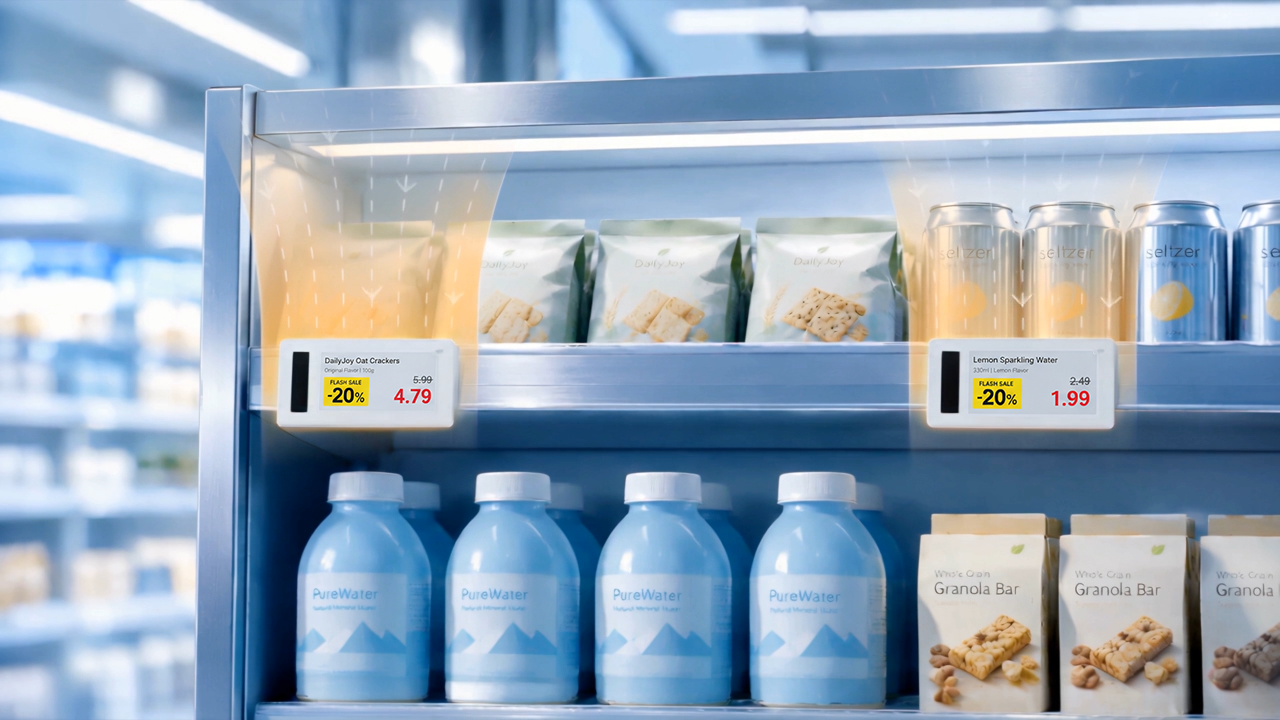
An electronic shelf label acts as a digital endpoint at the shelf. Each digital label is generally associated with a specific SKU and shelf position, allowing approved product and pricing information to be displayed where the customer makes a purchase decision.
When connected to retail systems, ESLs can support several important parts of shelf-level inventory and execution workflows.
SKU and Label Association
A reliable SKU-to-label mapping gives store teams a clearer reference for where a product is expected to be located. This can support shelf audits, planogram execution and the identification of labeling exceptions.
Connection with Core Retail Systems
An ESL platform can exchange approved information with POS, ERP, pricing or other store applications. This helps maintain consistency between centrally managed data and shelf-level displays.
Shelf-Location Reference
When product and shelf-location data are connected, associates can receive clearer guidance about where an item belongs. This can be useful when replenishing shelves, correcting misplaced products or picking items for online orders.
Task and Exception Visibility
In a connected store environment, ESL data can contribute to workflows for identifying and resolving label and execution exceptions. A standard ESL platform can report issues such as a failed or delayed content update, an incorrect SKU-to-label association or a label requiring attention. Detecting an empty shelf or a misplaced product requires physical-shelf observation from AI cameras, shelf-scanning robots or other sensing technologies, together with analytics and task workflows.
Building a More Reliable Shelf-Level Information Foundation
Better Product-to-Location Consistency
By digitally associating a label with a SKU and shelf position, retailers can create a more dependable location reference. This can make it easier to verify whether the correct product is displayed in the correct place.
Clearer location data can also support shelf audits and help associates resolve discrepancies between system records, planograms and physical shelf conditions.
More Consistent Label Execution
Paper-label workflows involve printing, sorting, distributing and placing labels across the store. During large-scale price changes or promotions, maintaining consistent execution can require significant coordination.
Electronic shelf labels allow approved product and pricing information to be distributed through a centralized system. This helps store teams keep shelf information current and execute large-scale updates more consistently.
More Structured Audit Routines
ESL data can be incorporated into regular shelf-audit processes. Retailers may use label status, SKU mappings, location references and system exceptions to help determine which areas require attention.
This allows teams to focus on specific exceptions instead of relying entirely on broad manual checks. The result can be a more repeatable process for maintaining shelf accuracy, although the outcome still depends on data quality and store execution.
Up-to-Date Connected Visibility
An ESL system can support up-to-date digital shelf information when it is integrated with retailer inventory and store systems. Physical shelf conditions must be observed separately, for example by AI cameras or shelf-scanning systems. A wider smart-shelf solution can then compare expected product and location data with observed conditions, providing greater shelf-level inventory visibility and directing associates to potential issues.
Supporting Replenishment and Omnichannel Fulfillment
Faster Response to Shelf Gaps
When an AI camera, shelf-scanning system or another component of the wider store solution identifies a shelf exception, associates can be directed to investigate and replenish the product. Electronic shelf labels can provide a precise shelf reference and, where supported, use LED indicators to help employees find the correct location. This can reduce search time and make replenishment tasks easier to execute consistently.
More Efficient Online-Order Picking
For buy online, pick up in store and other store-fulfillment workflows, associates must locate products quickly and accurately. ESLs with LED-assisted picking functions can visually guide an associate to the relevant shelf position. QR codes or connected product information may provide additional support when an item needs to be verified or an alternative must be considered.
Clearer Associate Workflows
A connected shelf environment can bring together product data, shelf locations and operational tasks. Retailers can use ESL location references and LED guidance for replenishment and picking, while AI cameras or other observation tools can supply evidence about physical shelf conditions. This does not remove the need for store teams; it can help them spend less time searching for information and more time resolving verified exceptions that affect availability.
KPIs Retailers Should Measure by Capability Layer
Retailers should establish a pre-deployment baseline and group KPIs by the capability being tested. Measures tied directly to ESL deployment include update reliability, label-change hours and SKU-to-label mapping errors. On-shelf availability, stockout and physical-shelf exception measures should be used only when the pilot also includes observation technologies and defined replenishment workflows. Useful measures may include:
- Inventory-record accuracy (supporting measure)
- On-shelf availability
- Stockout or out-of-shelf rate (for deployments with AI-camera or other physical-shelf observation capabilities)
- Replenishment response time
- Online-order picking time
- Picking accuracy or substitution rate
- Shelf-audit exception rate
- Promotional-compliance rate
- Manual label-change hours
- SKU-to-label mapping errors
Metrics should be evaluated within a representative pilot that includes different store formats, product categories and operating conditions.
Retailers should also avoid attributing every improvement in on-shelf availability or inventory records to ESLs alone. Changes in staffing, inventory policy, assortment, demand, store layout or other automation tools may influence the same KPIs. A credible evaluation should document these variables and focus on the shelf-level processes directly affected by the deployment.
Building a Connected Shelf with Hanshow
Hanshow electronic shelf labels can serve as digital endpoints within a broader connected-shelf architecture. The All-Star platform provides the centralized device-management and integration layer, connecting shelf devices with retailer applications and operational workflows. At this level, ESLs support accurate shelf information, SKU association, device status and location guidance; they do not independently verify whether a facing is empty or a product is misplaced. [3]
For retailers that need observed shelf conditions as well as digital shelf references, NexShelf extends this architecture. Within the solution, Nebular Ultra ESLs provide product-location reference points, the N5 AI camera observes shelf conditions, and platform services connect device data with operational workflows. According to Hanshow, this combination can identify out-of-shelf or misplaced-item exceptions and support planogram checks. These signals can help store teams investigate shelf gaps, replenishment needs and discrepancies between expected and observed shelf conditions, while the retailer’s ERP, WMS or inventory platform remains the system of record. [2]
Conclusion
Electronic shelf labels can support on-shelf availability and shelf execution by keeping approved shelf information aligned, maintaining SKU-to-location references and enabling LED-guided tasks where supported. They do not independently observe stock on the shelf or manage inventory records. Out-of-shelf, misplaced-item and other physical-shelf-state detection require NexShelf or another smart-shelf architecture that combines ESLs with AI cameras or other sensing and analytics. In Hanshow’s stack, All-Star connects devices and workflows, while NexShelf combines location references with observed shelf data to help teams investigate and resolve shelf-level exceptions. ERP, WMS and inventory platforms remain the systems of record for inventory management.
References
[1] IHL Group and Brain Corp, The Shelf Intelligence Report: Rebuilding Retail Relationships Through Automation (2025), based on a survey of more than 200 large and fast-growing U.S. retailers. https://www.ihlservices.com/product/shelf-intelligence-report-rebuilding-retail-relationships-through-automation/
[2] Hanshow, “Hanshow Unveils NexShelf at NRF 2026.” https://www.hanshow.com/en/news/hanshow-unveils-nexshelf-at-nrf-2026
[3] Hanshow, “All-Star Cloud.” https://www.hanshow.com/en/solutions/category/all-star-cloud