


For retailers, product availability is one of the most direct drivers of sales and customer satisfaction and store performance. When shoppers goes to the shelf and cannot find the product they want, the sale may be lost, but so may customer confidence in the store operations.
From a store execution perspective, a more precise concept is out-of-shelf. The product might still be in the backroom, recorded in the inventory system, or placed somewhere else in the store. But if it is not available at the right shelf position when the customer is ready to buy, the customer experience is almost the same as an out-of-stock situation.
That is why more retailers are now focusing on out-of-shelf detection and predictive replenishment. The goal is no longer only to know when inventory is low. It is to understand shelf-level availability, identify execution gaps, assign tasks quickly, confirm the result, and use data to prevent similar issues from happening again.
Connected shelf infrastructure, including Electronic shelf labels or digital price tags, is becoming an important foundation for this transformation. Integrated solution like Hanshow NexShelf solution can move beyond information display and become part of a broader execution layer that supports visibility, alerts, task management, and replenishment decisions.
Out-of-stock usually refers to inventory unavailability. Out-of-shelf, however, refers to a shelf-level execution issue. The difference is important because the customer experiences the shelf, not the inventory database.
A product can be out of shelf even when stock exists elsewhere in the store. It may be waiting for replenishment in the backroom. It may be placed in the wrong aisle. It may be hidden behind other products. It might be blocked by messy shelf conditions. It may have been removed from its assigned position during a busy period.
Traditional inventory systems are not always designed to detect these issues quickly because they are not designed to see the shelf. They can tell retailers what should be available, but not always what customers can actually find. This creates a gap between system availability and shelf availability.
A connected shelf execution system helps bridge this gap. Instead of relying only on inventory records, manual checks, or customer complaints, retailers can gain a clearer understanding of real shelf conditions and respond faster when issues occur.
The limits of manual shelf checking
Most stores still rely heavily on manual shelf walks, staff observation and customer feedback to identify out-of-shelf problems. These methods are familiar, but they are not always scalable.
Store associates may need to walk long aisles multiple times a day, checking thousands of SKUs and identify issues manually. During peak hours, shelf conditions can change faster than teams can react.
Manual checking can also be inconsistent. Different employees may define shelf isuues differently. Some may focus on empty positions, while others may notice hidden products, incorrect placement, or blocked facings. As a result, some issues are reported quickly, while others remain unresolved.
Image recognition can support shelf monitoring, but in high-SKU retail environments, SKU-level recognition may require continuous model training, maintenance, and updates when packaging changes. For retailers operating large store networks, this can create additional operational complexity.
Retailers need a more practical approach: a system that can detect shelf-level exceptions, separate real availability problems from visual noise, and guide store teams to react.
How Hanshow NexShelf Supports Out-of-Shelf Detection
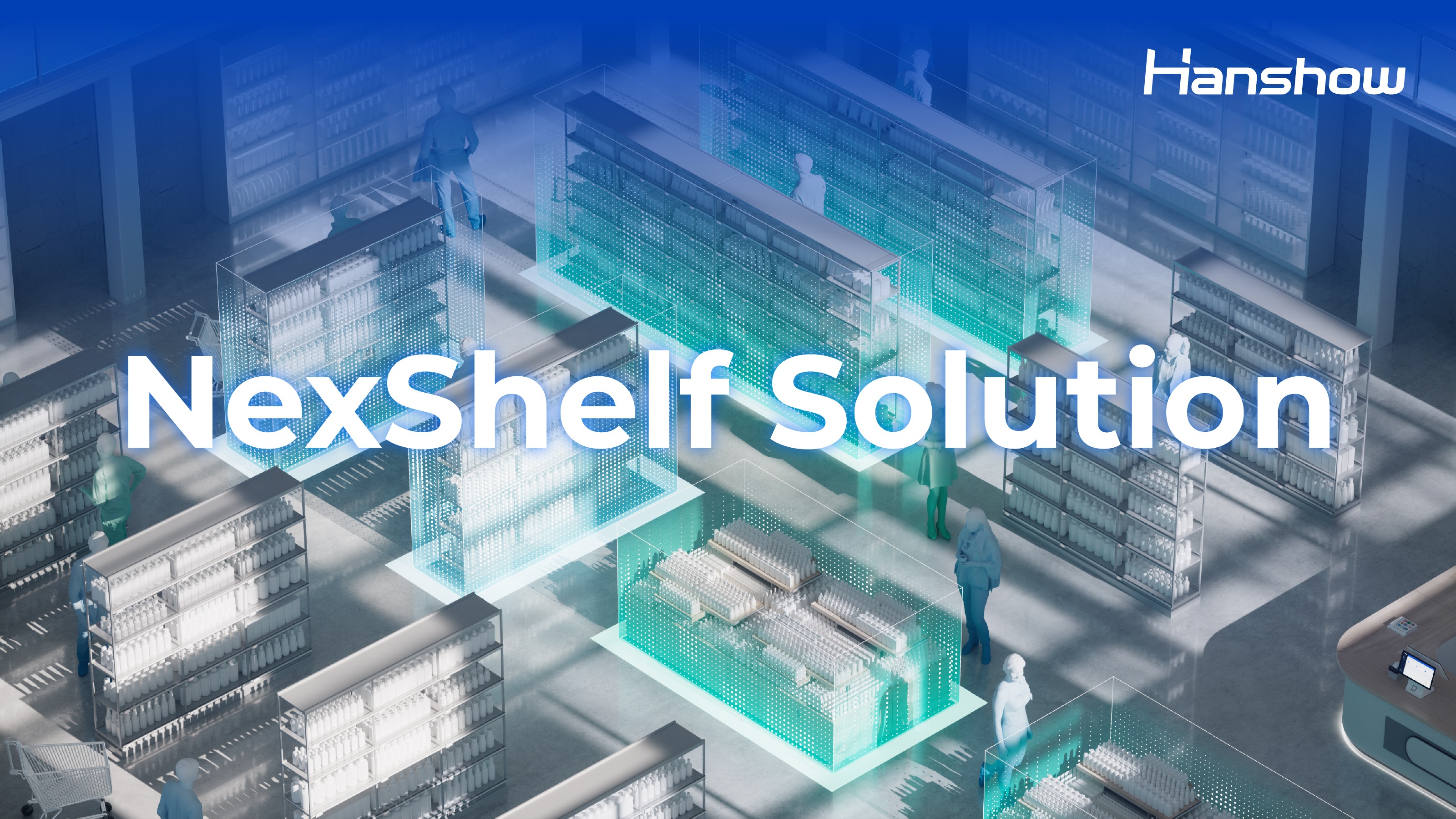
Hanshow NexShelf is an intelligent shelf solution designed to support shelf visibility and execution management. By combining Nebular Ultra electronic shelf labels, AI Camera, and platform capabilities, Nexshelf helps retailers better understand what is happening at the shelf.
Instead of treating an electronic shelf label as simple price display, NexShelf turns them into part of a larger smart shelf system. This helps retailers connect product information, shelf position, price content, and operational tasks.
For out-of-shelf detection, the key question is not only whether a product exists somewhere in the store. The operational question is whether the product is available where the shopper expects to find it.
By connecting shelf-edge infrastructure with sensing and platform workflows, retailers can identify product availability issues more accurately and create a clearer link between shelf conditions and store execution.
Accurate price and promotion information also supports this process. When product location, shelf availability, price content, and promotion data are aligned, retailers gain a more useful view of store performance and shopper-facing execution.
From Alert to Action
An out-of-shelf alert is useful, but it is only the first step. The real value comes when the alert becomes an operational action.
A closed-loop shelf execution system should support four stages: perception, analysis, decision, and execution. First, the system perceives the shelf condition. It then takes care to analyze the situation including location, duration, urgency and potential business impact, etc. Based on this analysis, it helps decide what action should be taken. Finally, the task is executed and the result is tracked.
For example, if a promoted product is missing from its assigned shelf position, the system should help identify the store, aisle, shelf location, SKU, and priority. The task can then be assigned to the appropriate store associate. After replenishment or correction, the system should help confirm whether the shelf condition has improved.
The value of a shelf alert is not the alert itself, but whether it can trigger the right action at the right time and confirm the result. This is what turns shelf visibility into shelf execution.
When electronic shelf labels are integrated with smart shelf sensing and task workflows, they can support the product-location relationship and help create a more actionable shelf data foundation. This allows retailers to move from simply detecting a problem to managing and improving the full execution process.
Building Predictive Replenishment Capabilities
Predictive replenishment goes beyond detecting what is already missing. It uses shelf insights, sales patterns, promotion plans, traffic signals, and historical issue duration to anticipate when replenishment will be needed.
For retailers, this can shorten the time between shelf risk and store response. Instead of waiting for a shelf to become empty, the system can help identify products that need attention earlier in the process.
This is especially important for high-demand products, promoted items and categories with fast-changing shelf conditions. A product under promotion may sell faster than usual. A price change may affect purchase velocity. Seasonal traffic may create sudden replenishment pressure. Without shelf-level visibility, these issues may only become clear after the customer experience has already been affected.
Connected shelf infrastructure can support predictive replenishment by linking real shelf conditions with digital store systems. When shelf sensing, product information, and store workflows are integrated, retailers can better understand where replenishment is needed and how urgently teams should respond.
Over time, this creates a more intelligent replenishment process. Store teams can respond earlier, headquarters can analyze recurring shelf gaps, and supply chain teams can adjust planning based on real shelf conditions rather than relying only on inventory records or sales data.
Operational KPIs for Closed-Loop Shelf Execution
To improve replenishment and shelf execution, retailers need the right KPIs. Traditional inventory metrics are useful, but they may not fully reflect what is happening at the shelf.
A closed-loop out-of-shelf system can help retailers measure:
- issue frequency
- issue duration
- response time
- task completion rate
- shelf availability
- promotion availability
- recurring problem locations
These KPIs help retailers understand not only whether an issue occurred, but also how long it lasted and how effectively the store responded. For example, However, one store may resolve issues within minutes, while another may leave them unresolved for hours. This level of insight can help retailers improve task planning, replenishment routes, category execution, and headquarters oversight.
By linking shelf-edge information with store systems, retailers can build a more measurable and transparent execution process.
Benefits for Store Teams, Headquarters, and Supply Chain
A closed loop shelf execution system creates value for multiple teams across retail organization. For store associates, it reduces uncertainty. Instead of searching for problems manually, teams can receive clear task guidance including what needs attention, where it is located, and how urgent it is. This helps associates focus on the most important shelf issues and spend more time supporting customers.
For store managers, it supports better daily planning. Managers can see which departments need more attention, which shelf problems occur most often, and how quickly teams are completing tasks. This helps improve store execution without relying only on manual observation.
For headquarters, shelf-level insights provides a more consistent way to compare execution across stores. Retail leaders can evaluate shelf availability, promotion execution, and response performance in addition to traditional sales results.
For supply chain teams, real shelf data provides a stronger signal for planning. If a product repeatedly becomes out of shelf despite inventory availability, the issue may be store replenishment. If the product is frequently unavailable across many stores, the supply chain may need to adjust forecasting, allocation, or replenishment planning.
By connecting shelf execution with replenishment workflows, retailers can create a stronger link between store operations and supply chain decision-making.
Why Shelf Availability Matters for Customer Experience
Out-of-shelf issues are not just operational problems. They directly affect customer trust.
Customers don’t care whether a product is available in the backroom if they cannot find it on the shelf. They lose confidence when shelf information is inaccurate, promotions are unclear, or prices do not match expectations.
An electronic shelf label system can help improve price transparency by displaying accurate and consistent shelf information. When this capability is integrated into a smart shelf solution, it can also support broader shelf execution by helping retailers connect price, promotion, product location, and availability data.
For shoppers, the result is simple: products are easier to find, prices are clearer, promotions are more reliable, and the store experience becomes more consistent.
For retailers, this means shelf execution is not only about operational efficiency. It is also about protecting customer confidence at the point of decision.
Conclusion
Out-of-shelf is one of the most important execution challenges in physical retail. It represents the gap between what the system believes is available and what the customer can actually buy at the shelf.
Solving this problem requires more than inventory reports or manual shelf checks. Retailers need real-time shelf visibility, proactive alerts, task management, execution tracking, and predictive replenishment capabilities.
Hanshow NexShelf supports this transformation by combining Nebular Ultra electronic shelf labels, N5 AI Camera, and platform capabilities into a smart shelf solution for connected store execution.
The future of replenishment will not only be about what is in stock. It will also be about what is on the shelf, what needs action, and how quickly store teams can respond.
By building closed-loop shelf execution, retailers can move from reacting to shelf problems toward preventing them, creating more efficient operations and a more reliable customer experience.