Empty shelves are among retail’s most costly operational problems. According to IHL Group’s inventory distortion research, “shelf empty” situations alone may cost the food and grocery sector an estimated $42.6 billion in lost sales. [1]
On-shelf availability, or OSA, refers to item availability on the shelf. It measures the percentage of time a product is physically present and visible on the shelf when a shopper wants to buy it.
For example, a 90% OSA rate for soft drinks means shoppers find products in the category on the shelf 90% of the time. During the remaining 10%, the item is unavailable at the point of purchase—even if stock exists elsewhere in the store.
That gap may appear minor, but across a full year it represents more than 30 days of lost shelf availability. This is why improving OSA is a priority for supermarkets.
The Hidden Cost of Stockouts in Supermarkets
For shoppers, an empty shelf has the same effect as a stockout, regardless of whether additional units are available in the backroom. The cost extends beyond the immediate lost sale.
According to IHL Group, a global research and advisory firm, consumers typically give a retailer only two to three chances to have a key item in stock before they stop returning to that retailer for it.[2] This means retailers risk losing not just a single sale, but the customer’s future purchases in that category as well.
Poor on-shelf availability can also weaken trust. Bare or disorganized shelves may suggest inconsistent store execution, even to shoppers who were not looking for the missing item. Over time, repeated gaps can encourage customers to shop elsewhere.
The Root Causes of Poor OSA
Improving OSA starts with understanding where the gaps actually come from. Here are a few recurring causes:
1. Delayed Shelf Visibility
Shelf conditions are often identified through periodic aisle checks. By the time a gap is recorded and assigned, the shelf may already have been empty for a significant period.
2. Replenishment Delays
Even when a gap is detected, the response still depends on an effective workflow. Associates need to receive the task, locate available stock, and replenish the correct shelf position. Any delay in that sequence extends the availability gap.
3. Insufficient Stock
Sometimes the shelf remains empty because stock is genuinely unavailable. In other cases, phantom inventory caused by scanning errors, shrink, or misplaced products leads the system to show stock that associates cannot find.
How Leading Retailers Improve OSA
Retailers that perform well on OSA tend to combine process discipline with better visibility tools rather than relying on either alone.
On the process side, common approaches include staff training on replenishment routines, redesigning the shelf-replenishment process itself, improving inventory accuracy through more frequent and reliable counting, and making more consistent use of planograms to guide product placement.
For instance, Walmart’s FAST Unloader system redesigned the sequencing of unloading and shelf replenishment. Published reports associate the initiative with more efficient replenishment and lower out-of-stock rates. [3]
On the visibility side, retailers increasingly use shelf-level technologies such as electronic shelf labels, sensors, and AI cameras to identify gaps closer to the time they occur, rather than waiting for the next manual check.
Asda, for example, has piloted pole-mounted shelf cameras across several UK stores, with each camera monitoring roughly eight feet of shelf space using computer vision to flag stock issues in real time.[4]
Carrefour has partnered with shelf-imaging and electronic shelf label providers to build out its own visibility layer.[5] Kroger, meanwhile, introduced edge-AI-powered digital shelves in partnership with Microsoft, syncing pricing and promotional data with real-time stock visibility.[6]
Technology Trends in OSA Management
The visibility tools mentioned above are evolving quickly, and a few technology trends now stand out in how supermarkets manage OSA.
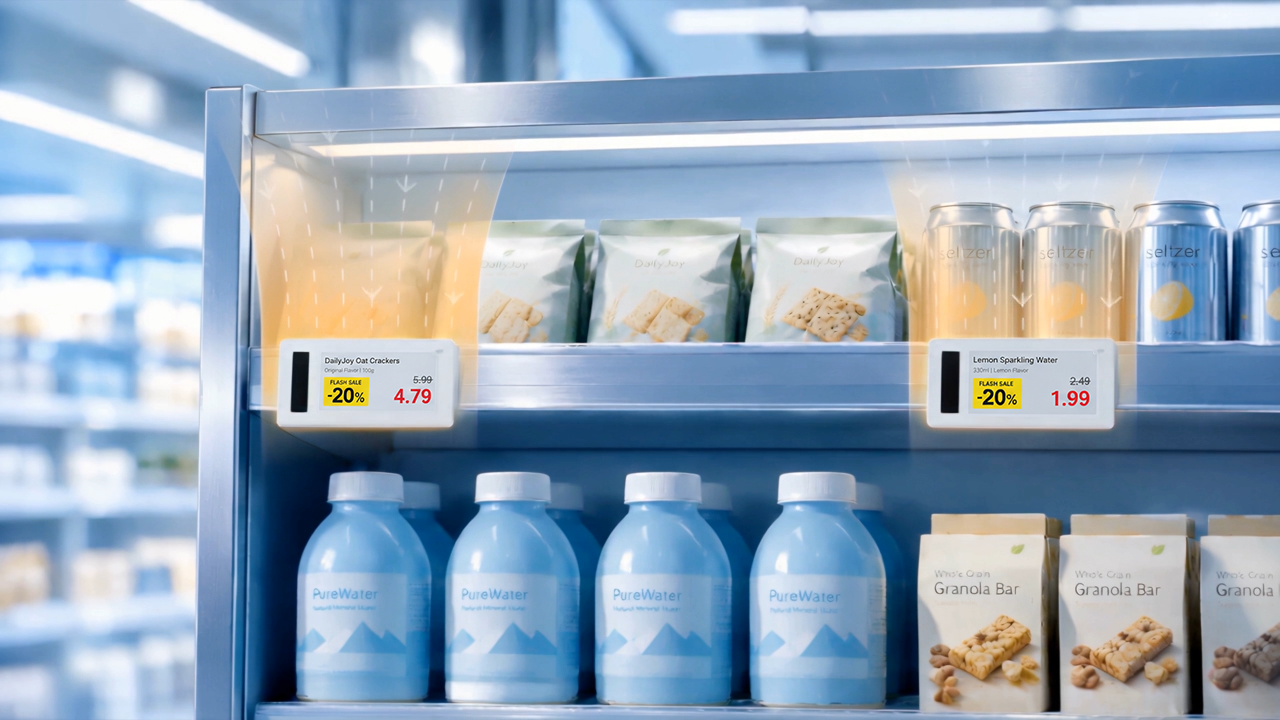
Electronic shelf labels, or digital price tags, have evolved beyond price display. When connected with inventory platforms and complementary sensing technologies, ESLs can support pricing checks, product-location workflows, and faster identification of gaps between system records and shelf conditions.
Computer vision and AI cameras are increasingly used to monitor shelf conditions on an ongoing basis. Cameras positioned along aisles can help identify empty facings, misplaced products, or planogram deviations without relying only on periodic manual inspections.
Store digital twins represent a newer development, combining shelf, product, and location information into a continuously updated digital representation of the physical store. This can give retail teams a more connected view of store conditions than separate systems provide.
Across all of these trends, the common goal is the same: closing the gap between what a system believes is on the shelf and what a shopper actually sees when they walk down the aisle.
How Hanshow Supports Connected Shelf Visibility
Hanshow helps supermarkets improve on-shelf availability with technology built around the shelf. NexShelf combines electronic shelf labels with AI-enabled cameras and product-location capabilities, helping retailers move from periodic manual checks toward more continuous shelf visibility and faster exception handling.

Conclusion
On-shelf availability is where inventory accuracy, replenishment discipline, and customer experience come together. Even modest improvements at shelf level can support better store execution and help reduce missed sales opportunities.
If you are exploring ways to give store teams clearer and faster insight into shelf conditions, Hanshow’s electronic shelf label systems and NexShelf solution can support your operating model. Contact our team to learn more.
Reference
- https://www.supermarketnews.com/finance/retail-losses-reach-1-77-trillion-worldwide
- https://www.ihlservices.com/product/shelf-intelligence-report-rebuilding-retail-relationships-through-automation/
- https://smartdev.com/ai-use-cases-in-inventory-management/
- https://retailtechinnovationhub.com/home/2025/8/30/asda-kicks-off-trial-of-focal-systems-ai-powered-store-shelf-scanning-cameras-in-five-locations
- https://www.prnewswire.com/news-releases/carrefour-chooses-pricer-as-esl-partner-301810025.html
- https://www.cnet.com/tech/services-and-software/microsoft-and-kroger-put-connected-grocery-shopping-to-the-test/