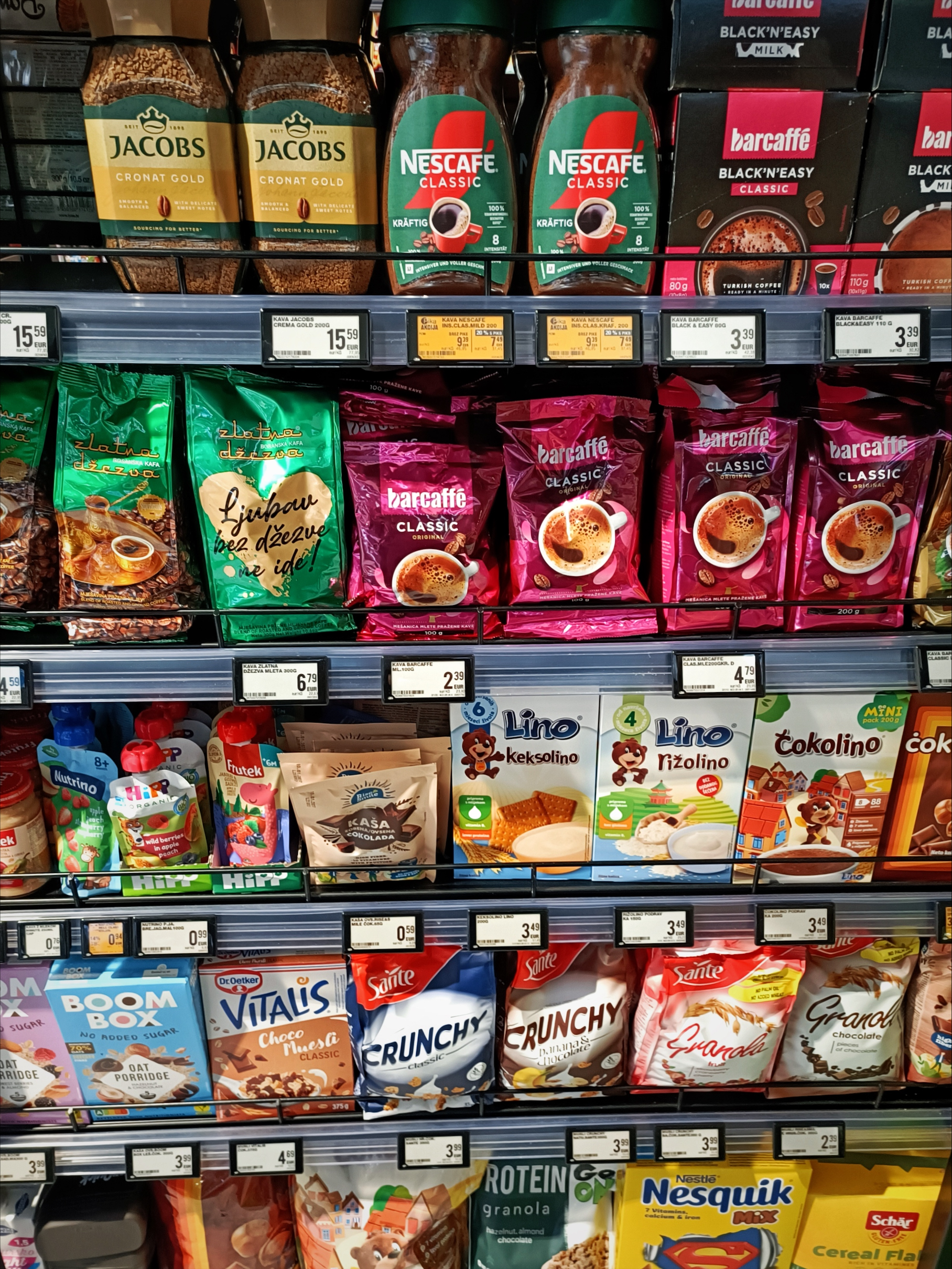
Imagine this: a customer sees a promotional price on the shelf, but a different amount appears at checkout. Even when the difference is small, the consequences may not be. The customer may complain, abandon the purchase, question the retailer’s credibility, or report the discrepancy to a consumer protection authority. Repeated inconsistencies can create financial, reputational, and compliance risks.
An electronic shelf label (ESL), also known as a digital price tag, can reduce manual relabeling, but an effective electronic shelf label price audit still depends on one core question: was the approved price synchronized correctly from the pricing system to POS and to the assigned shelf display? Retailers need evidence for each handoff, plus a way to detect, investigate, and resolve exceptions.
Establish Clear Ownership Across the Price Chain
Effective price auditing begins with clear ownership. The pricing team creates and maintains price records. Authorized functions, such as category management, finance, or legal, review and approve changes where required. The POS team applies approved prices at checkout; the ESL platform team distributes and monitors digital price tag updates; store employees verify label placement, product-label associations, and shelf conditions.
These responsibilities should be documented in a clear responsibility matrix, including who may create, approve, publish, verify, and correct a price change. Where appropriate, retailers should also separate key duties—for example, preventing the same person from both creating and approving a high-risk change.
Trace the Complete Price-Change Workflow
Document one end-to-end workflow: Pricing System -> Approval -> POS / ESL Platform -> ESL -> Confirmation / Exception. The same sequence should be used for standard prices, markdowns, promotions, and their expiry events.
The process begins when a standard price, markdown, or promotion is created in the pricing system. The record should specify the product, new price, reason for the change, effective period, applicable stores, and any promotional conditions. Required approvals must be completed before the change is released.
At the scheduled time, the approved record is released to POS and the ESL platform. POS applies the price used at checkout; the ESL platform maps the same record to the affected products, stores, and labels. Each handoff should produce evidence showing when the record was received, processed, and applied, including the store and product scope.
Retailers should distinguish between an update being published, transmitted, and confirmed by the digital label. A send-success or transport acknowledgement does not prove that the correct price appeared on the shelf. Label confirmation, reconciliation with POS, and physical verification when needed are what complete the audit trail.
The workflow should also cover the end of a promotion. When an offer expires, the correct regular price—or the next authorized price—must be restored at both checkout and the shelf. This expiration event should be monitored and documented with the same level of control as the original price update.
Maintain Audit-Ready Logs
Logs are essential for verifying why a price change was made, who authorized it, and when it took effect. At a minimum, records should show:
- ● Who created and approved the change
- ● When approval and publication occurred
- ● The old price, new price, and reason for the change
- ● The effective start and end times
- ● The products, stores, and labels included
- ● Which devices updated successfully
- ● Which devices failed, remained offline, or did not confirm
- ● Whether the system retried the update
- ● Who investigated each exception and what action was taken
- ● When the issue was resolved and independently verified
Access and configuration changes should also be logged. This includes modifications to user permissions, approval thresholds, product-label associations, system interfaces, and update rules.
Audit records should be protected against unauthorized alteration and retained according to internal policy and applicable legal requirements. Time synchronization across systems is also important. If the pricing system, POS, and ESL platform use inconsistent timestamps, reconstructing the sequence of events can become unnecessarily difficult.
Handle Failed, Delayed, Offline, and Incorrect or Expired Prices
Every exception should answer two operational questions: how was it detected, and what action closes it? Retailers should define severity, ownership, response time, evidence, and independent confirmation for failed or delayed updates, offline ESLs, and incorrect or expired prices.
For a failed or delayed update, detect the exception through a missing label confirmation, a late timestamp, or a mismatch between the approved record and the downstream status. Compare the event log with POS and ESL platform records, retry or hold the change according to policy, escalate time-sensitive promotions, and close the incident only after the label and checkout price are checked.
For an offline ESL, detect the device in the connectivity or heartbeat queue and confirm the last successful update. Check network reachability, battery, device status, product-label mapping, and the local shelf; if the required price is not visible, staff should follow an approved temporary procedure and recheck the label after recovery. Repeated offline events need a documented root-cause action.
For an incorrect or expired price, detect the mismatch by comparing the authorized price, POS price, ESL confirmation, and promotion validity window. Stop or roll back the affected publication, restore the authorized price, and verify the shelf and checkout before closing the exception. Expiry checks should receive the same control as the original promotion.
For a multi-label or multi-store incident, document rollback authority, the prior approved price version, affected scope, and completion evidence. Manual shelf sampling adds a useful check after major price events, system changes, store openings, or incidents.
Measure the Quality of Price Execution
Retailers also need to measure whether updates are completed accurately and on time, and whether identified problems are resolved efficiently. The following four indicators can help assess the overall quality of price execution:
- ● Update Success Rate: the percentage of targeted labels that confirm the correct update within the required time
- ● Price Error Rate: the percentage of checked items with a difference among the authorized price, shelf price, and checkout price
- ● Audit Pass Rate: the percentage of manually sampled products that meet all verification requirements
- ● Issue Resolution Time: the time from exception detection to correction and confirmation
Results should be segmented by store, region, product category, promotion type, system interface, and device status. A high overall success rate can conceal failures in a small group of stores or during time-sensitive promotional launches.
Targets should include both accuracy and timeliness. An update that is eventually successful may still create risk if it occurs hours after the approved effective time. Retailers should review trends, recurring root causes, and overdue corrective actions—not only monthly averages.
Conclusion
An effective ESL price update audit framework connects authorization, system activity, device confirmation, exception management, and physical verification. The objective is to demonstrate that the right price was approved, applied to the correct product and location, displayed at the intended time, and corrected promptly when execution failed.
Audit procedures must be adapted to local pricing, consumer protection, tax, weights and measures, record-retention, and promotional disclosure requirements. Legal and compliance teams should determine which controls and evidence are appropriate in each market.
At Hanshow, we view traceability and dependable update execution as essential parts of electronic shelf label operations. The All-Star platform can support centralized label management, update-status visibility, and exception monitoring within a retailer’s broader pricing and control environment. Contact us to discuss how Hanshow ESL solutions can support reliable price execution across store networks.