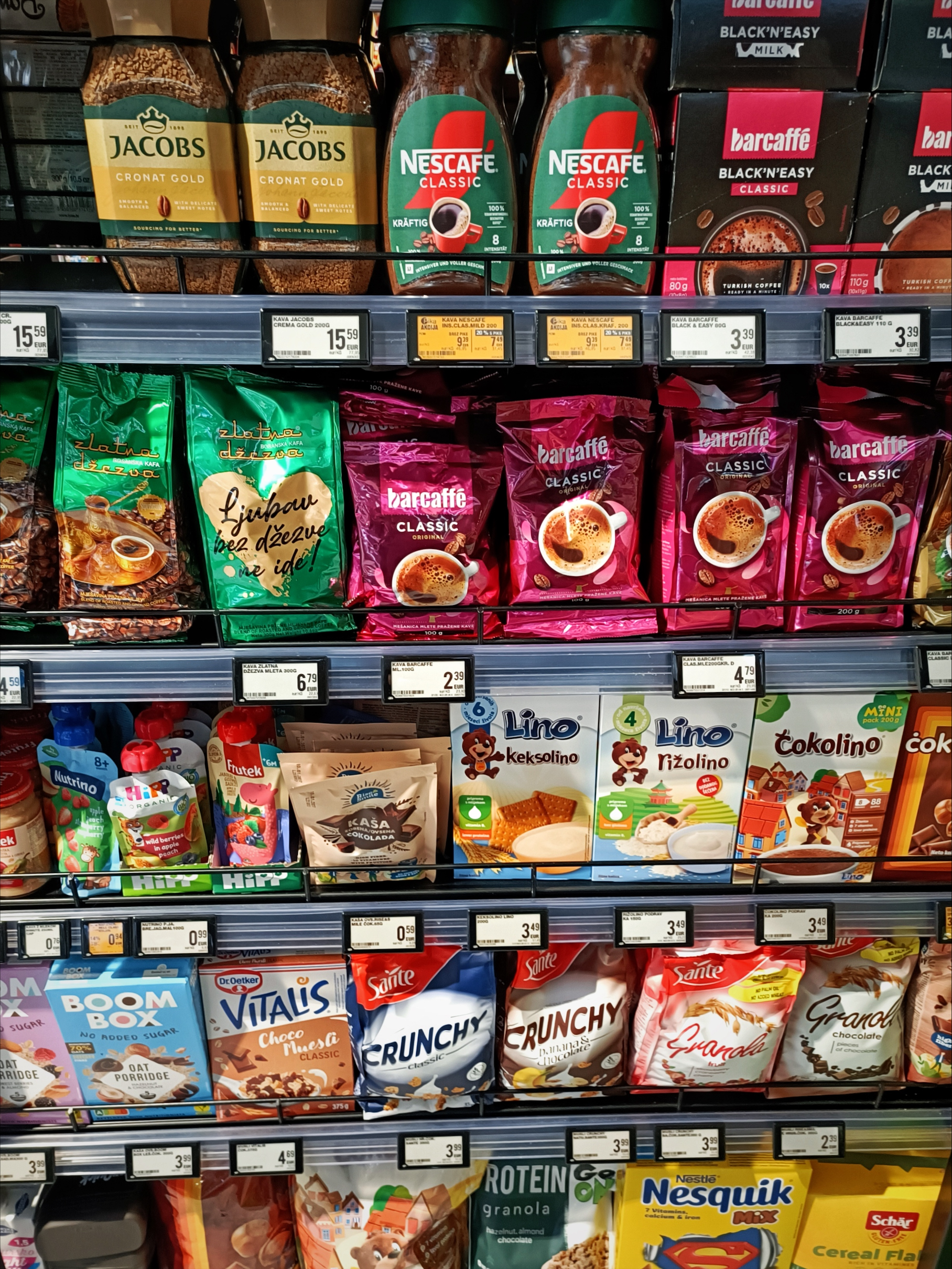
Fresh food retail depends on timing. Bread, prepared meals, meat, seafood, fruits, and vegetables all have limited selling windows, and their prices may need to change as products approach their use-by dates, quality declines, or sales slow down. In practice, store teams may need to inspect product condition, decide which items qualify for a markdown, print and replace paper labels, and coordinate the same process across multiple stores.
For retailers, the challenge is not simply deciding when and how much to markdown. The decision must also reach the shelf accurately and on time. A price approved in a pricing system does little if the old paper label is still displayed on the shelf.
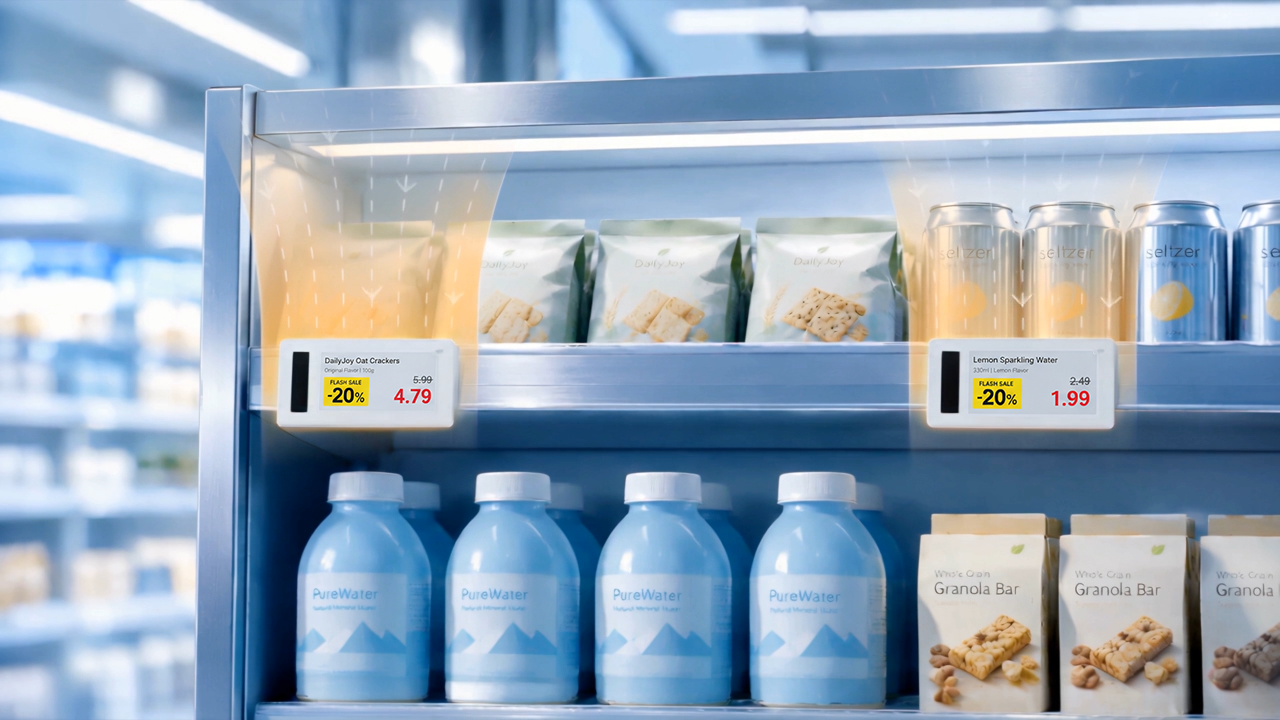
Electronic shelf labels (ESLs), also known as digital price tags, are an important execution layer within this process. An ESL does not decide which products should be discounted. Instead, it helps retailers turn an approved pricing decision into an accurate, timely, and trackable shelf update.
What Should Guide Fresh Food Markdowns?
A fresh food markdown should not be based on a single factor. Retailers typically need to consider several types of information before approving a price change.
Shelf life and expiration information can indicate how much selling time remains for a product. A product with only a few hours or days left may require a different markdown strategy from one that has several days remaining.
Inventory levels also matter. A store with excess inventory may need to accelerate sell-through, while a product with limited stock may not require an immediate reduction.
Quality inspection results provide another important input. Freshness, appearance, packaging condition, and other quality indicators may influence whether a product remains at its current price or requires markdown treatment.
Retailers may also consider sales velocity, time of day, store traffic, and established pricing rules. For example, a supermarket may have different markdown rules for bakery products in the evening and packaged meat approaching its use-by date.
These inputs help determine the appropriate action. However, the electronic shelf label itself does not make that pricing decision. The retailer remains responsible for establishing the rules and approving the final price.
How Markdown Workflows Differ Across Fresh Food Categories
Not every fresh food department operates in exactly the same way.
Bakery and Prepared Foods
For bakery and prepared foods, retailers may need to consider production time, remaining selling hours, current inventory, sales pace, and expected demand during the rest of the day. A product that sells well in the morning may require no markdown, while the same product may need a price reduction later if significant inventory remains.
As a result, markdowns may be reviewed and updated multiple times during a day, particularly toward the end of the selling period. An ESL can execute a scheduled markdown at the approved times and provide update status when an additional change is needed. Retailers still need a workflow that can support rapid price updates when actual sales or inventory conditions differ from expectations.
Meat and Seafood
For meat and seafood, price decisions may depend more heavily on remaining shelf life, use-by dates, inventory levels, quality inspection results, and sales velocity.
A retailer may establish different markdown stages as a product approaches its use-by date. For example, the price may remain unchanged while sufficient selling time remains, then move to a first markdown and potentially a deeper markdown as the deadline approaches.
This means updates may occur once per day or at predefined stages, rather than changing several times within a single day. A digital price tag can display each scheduled stage through a rapid price update, while failed or delayed changes can be surfaced for exception management. The exact frequency depends on the retailer's food safety procedures and markdown rules.
Fruits and Vegetables
For fruits and vegetables, remaining shelf life alone may not be enough to determine the price. Retailers may also consider visual appearance, ripeness, freshness, inventory volume, sales velocity, and incoming supply.
Because these conditions can change quickly, some produce items may require more frequent price reviews, while others can remain at the same price for longer. When an approved review changes the price, an ESL can support a rapid price update; exception management can keep employees focused on labels or locations that need manual checking. Retailers may need to adjust prices when inventory accumulates or when the condition of a product changes faster than originally expected.
How Electronic Shelf Labels Fit Into Fresh Food Markdown Workflows
Electronic shelf labels execute approved price changes, rather than determine pricing decisions. The retailer remains responsible for deciding when a product should be marked down and what the new price should be.
The distinction between price decision and price execution is important.
A typical workflow may look like this:
Product and inventory data → Markdown rules → Price approval → Scheduled release → Electronic shelf label update → Store confirmation
The retailer’s pricing or retail management system determines which products qualify for a markdown based on predefined rules and approved data. Once the new price is authorized, it can be transmitted to the electronic shelf label system for shelf execution.
The ESL then displays the approved price at the shelf. Instead of asking an employee to print and replace an individual paper label, the retailer can manage the update digitally.
This helps shorten the gap between price approval and shelf execution; store teams still need to handle failed updates.
How Can Retailers Verify Markdown Execution?
Sending an approved price change to an electronic shelf label is not necessarily the end of the process. Retailers also need to know whether the change was successfully displayed and identify any exceptions that require attention.
For time-sensitive fresh food markdowns, execution visibility is particularly important. If a price update fails or a label becomes unreachable, store employees should be able to identify the affected product and verify the shelf manually. This gives retailers an opportunity to correct the issue before the markdown window becomes too short.
Retailers should therefore consider whether their ESL solution can provide visibility into update status, failed updates, and exceptions. Instead of checking every label manually, employees can focus on products or locations that require intervention.
This creates a more practical division of work: digital systems handle routine price updates, while store employees concentrate on exceptions, product conditions, and other decisions that still require human judgment.
How Should Retailers Measure Markdown Performance?
Retailers can evaluate the effectiveness of their markdown workflows through several operational metrics.
- ● Markdown response time measures how quickly an approved price change reaches the shelf.
- ● Update success rate shows how consistently scheduled changes are completed.
- ● Waste or shrink rate helps retailers understand whether markdown processes contribute to reducing products that remain unsold.
- ● Sell-through rate indicates whether discounted products are moving more effectively before their selling window ends.
- ● Labor hours can show how much employee time is spent on price changes, label replacement, and exception handling.
These measurements should be considered together. A faster price update, for example, does not automatically mean that a markdown strategy is effective. Retailers still need to evaluate whether the pricing rules, inventory data, quality controls, and store execution are producing the intended results.
Supporting More Sustainable Fresh Food Operations
Fresh food markdowns can form part of a retailer’s broader food-waste reduction and sustainable retail strategy. The mechanism is operational: when a retailer can identify products approaching the end of their selling window, approve a markdown and publish it at the shelf promptly, more products may have a chance to sell before they become unsellable.
Digital price tags can support this process by enabling scheduled or rapid price updates and reducing repeated paper-label replacement. That can improve the time available for sell-through and make exceptions easier to spot, but any waste reduction depends on accurate inventory and quality data, suitable markdown rules, food-safety controls and store execution. ESLs do not identify batches or decide discounts.
Retailers should measure the mechanism rather than assume an outcome: compare waste or shrink by category and store, time from approval to shelf update, sell-through before the use-by window, paper labels avoided, and exception-handling effort against a baseline. Food safety requirements, product quality checks, inventory accuracy, pricing rules and staff execution remain essential.
Building a More Reliable Markdown Workflow With Hanshow
Hanshow electronic shelf label solutions can support retailers as they connect approved pricing decisions with shelf-level execution across fresh food departments.
Together with the All-Star platform and retailer system integrations, Hanshow ESLs can receive approved price changes digitally and support scheduled or rapid markdown execution across stores. For fresh food operations, this can reduce repeated manual label replacement and provide clearer visibility into price-update status and exceptions.
The technology does not replace the retailer's responsibility for deciding when a product should be discounted. Instead, it helps create a more efficient execution layer between the retailer’s pricing process and what customers see on the shelf.
The goal is to create a reliable workflow that connects pricing decisions, store execution, and measurable results.