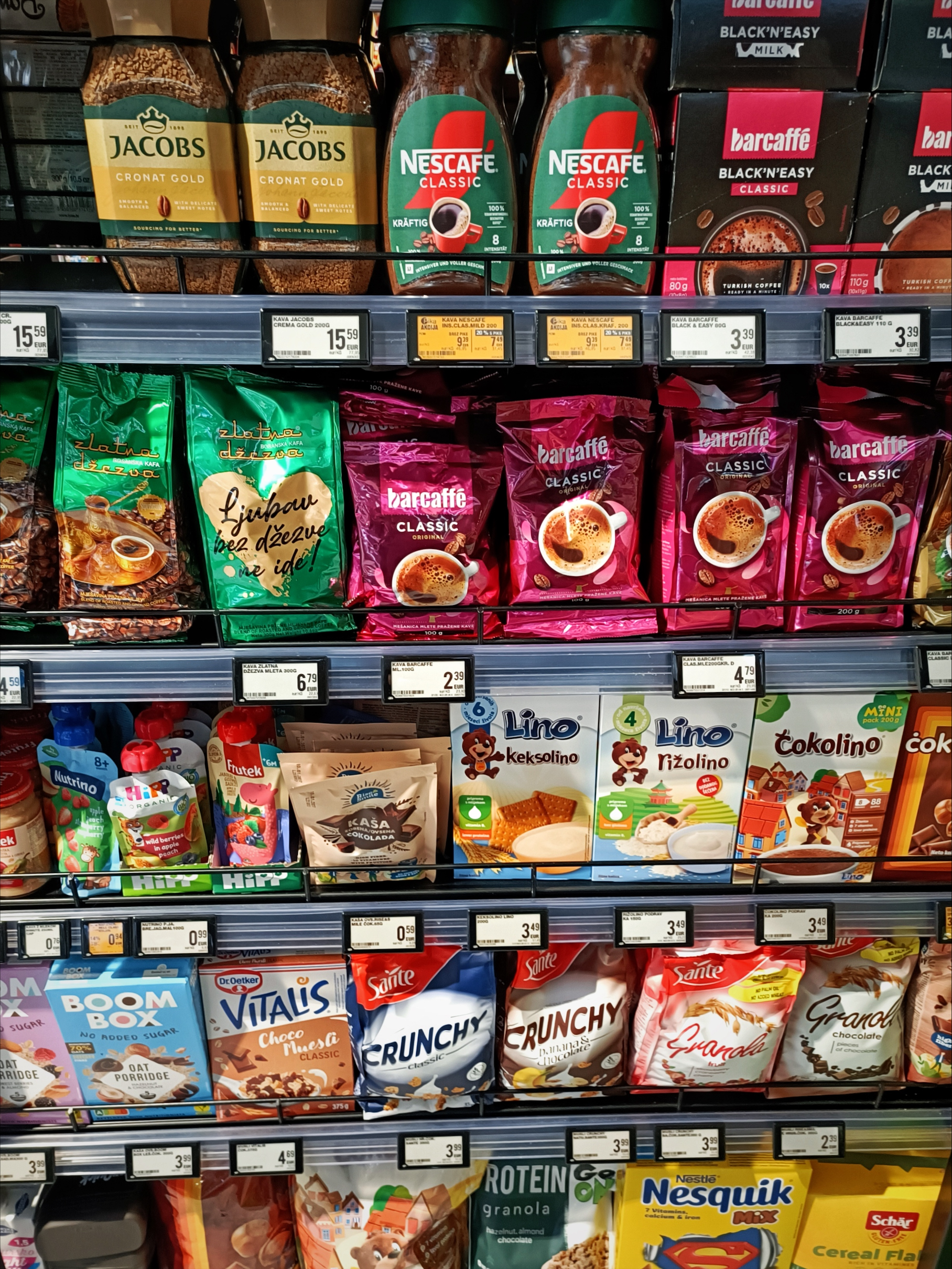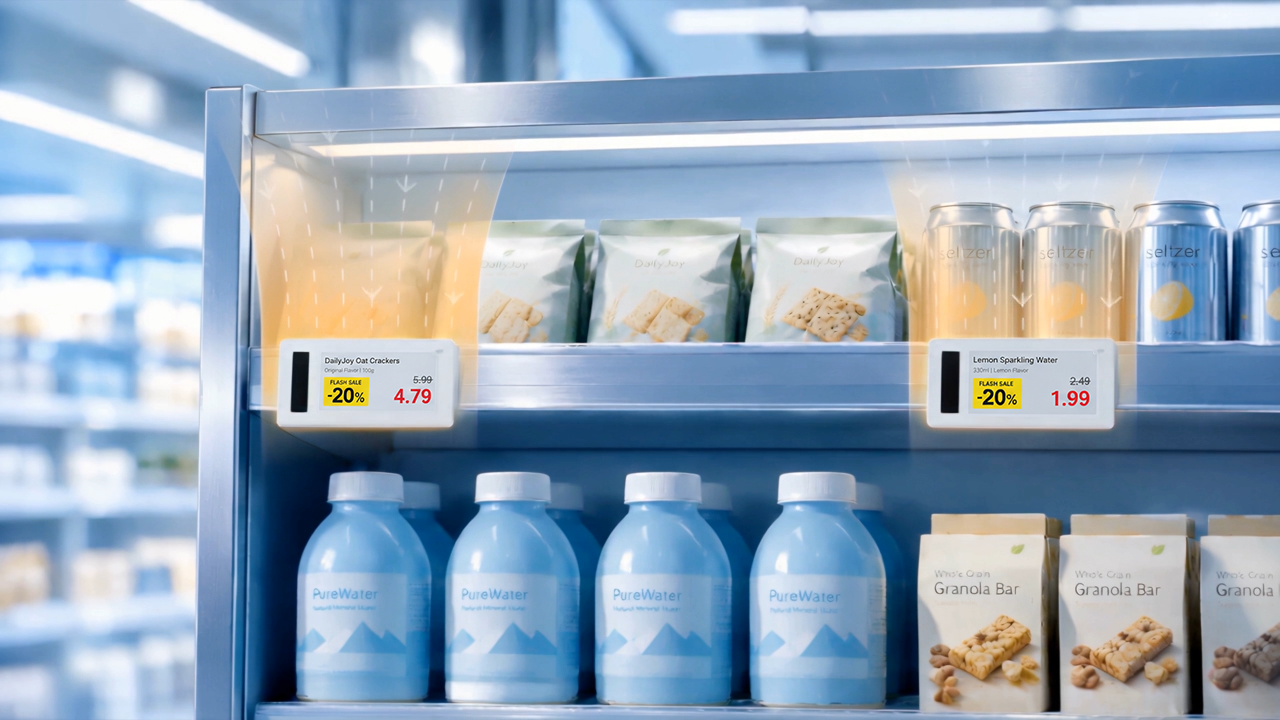
Retail sustainability at the shelf is most practical when it focuses on measurable operating inputs: paper and printing consumables used for price changes, energy used by shelf-level displays, and food waste associated with time-sensitive markdown workflows. For retailers, the key question is how electronic shelf labels (ESLs) can support these processes without overstating the impact of the technology itself.
An electronic shelf label system can contribute to these priorities by digitizing shelf-level price and product information. It can support ESG goals when retailers measure results against a credible baseline and account for the complete operating model.
Reduce Paper and Printing Consumables
Traditional shelf labeling consumes more than the paper visible on the shelf. Retailers may also use printers, ink or toner, label rolls, packaging and transport, while employees spend time printing, sorting and installing replacement labels.
The scale can be substantial. The Food Industry Association reports that an average US grocery store manually changes more than 7,000 price tags per week, while a large retail chain may print millions of tags weekly.[1] Digital shelf labels can replace many of these recurring print cycles with centrally managed updates. When connected to the same pricing source, they may also improve alignment between shelf and checkout prices.
Use E-Paper to Support Lower Shelf-Level Energy Demand
Many digital price tags use e-paper displays, whose energy profile can support more sustainable retail operations. Unlike continuously illuminated displays, e-paper retains an image without drawing power continuously. Electricity is used mainly when content changes and when the label communicates with the supporting network. This can support lower operational energy demand for shelf-level displays when prices and product information remain unchanged for long periods.
A 2025 study of an e-paper and LoRa-based ESL prototype reported a projected operating life exceeding five years under its specific design and test conditions.[2] This finding illustrates why e-paper and low-power communications can support lower-energy shelf operations; it is not a universal guarantee for every deployment.
Connect Markdowns to Food-Waste Workflows
One of the most important sustainability opportunities is not the display itself but the workflow that connects inventory information, expiry rules and shelf execution.
With paper labels, a markdown may require employees to identify affected products, print stickers, locate every item and apply the new price manually. Delays are particularly costly for fresh produce, dairy, bakery, meat and prepared foods because the selling window is short.
When retailer pricing, inventory, point-of-sale, or product-quality systems are integrated with the ESL platform, approved markdown rules can be translated into scheduled shelf updates. For example, a retailer may approve a predefined discount when a product enters a specified expiry window or when other agreed business conditions are met. The approved price can then be transmitted to the digital price tag without waiting for a new paper label.
Research highlighted by INFORMS found that coordinated decisions about product positioning, discount timing and discount depth reduced relative waste by an average of 21.24% in the study’s modeled scenarios.[3] The result does not mean an ESL alone will reduce every retailer’s waste by that amount. It shows that better-timed shelf and pricing decisions can materially affect waste—and that digital shelf infrastructure can help execute those decisions faster.
Treat Labor Capacity as a Resource-Efficiency Measure
Reducing manual label changes is relevant to sustainability when it improves how store resources are allocated, not as a standalone headcount claim.
When associates spend less time printing, sorting, finding and replacing paper tags, retailers may redirect capacity to replenishment, availability checks, fresh-food quality, customer service and online-order fulfillment. Any labor effect should be measured as part of the same operating baseline and should not be presented as an automatic result of ESL deployment.[1]
Build an ESG Measurement Scorecard
Once the sustainability mechanisms are clear, retailers can measure them with a scorecard that combines environmental, lifecycle and operating indicators. Establish a baseline before implementation and repeat the measurements during a controlled pilot and after stabilization. The pilot should record deployment conditions—update frequency, network conditions, temperature and maintenance practices—so that later energy, battery and reliability measures can be interpreted against the same operating context.
- ● Paper labels printed, paper weight and printing consumables used or avoided
- ● Printer energy, maintenance, label distribution and disposal
- ● ESL hardware, communications equipment and end-of-life recovery
- ● Daily updates, communication retries, failed devices and battery replacements
- ● Markdown decision-to-display response time
- ● Food-waste rate by category, store and reason
- ● Labor hours spent on label changes and exception handling
- ● Price-update success and exception rates
- ● Device failure, repair or refurbishment, and recovery rates
Retailers should compare the scorecard with similar stores and adjust for seasonality, promotions, assortment changes and sales volume. The baseline and pilot should state system boundaries and assumptions so that paper, energy, battery, labor and food-waste changes are not attributed to ESL without evidence.
Where Hanshow Fits
Hanshow electronic shelf label solutions and the All-Star platform can support centralized shelf updates, device monitoring, and scheduled markdown execution when integrated with retailer pricing, POS, inventory, and expiry-management processes. Depending on the deployment, update records and device data can help retailers monitor response times, exceptions, battery replacement, and other operational indicators; they do not by themselves establish a company-wide ESG result.
References
[1] Food Industry Association (FMI), “Electronic Shelf Labels: Improving Accuracy, Reducing Waste and Supporting Modern Grocery Retail,” fact sheet. https://www.fmi.org/industry-topics/fact-sheet/electronic-shelf-labels--improving-accuracy--reducing-waste-and-supporting-modern-grocery-retail
[2] Research and Design a Low Power Electronic Shelf Label Based on E-paper Display and LoRa Technology, EAI Endorsed Transactions on Internet of Things, 2025. https://publications.eai.eu/index.php/IoT/article/view/9488
[3] INFORMS, “Smarter Shelf Strategy Can Boost Retail Profits and Cut Food Waste by More Than 20%, New Study Finds,” news release. https://www.informs.org/News-Room/INFORMS-Releases/News-Releases/Smarter-Shelf-Strategy-Can-Boost-Retail-Profits-and-Cut-Food-Waste-by-More-Than-20-New-Study-Finds