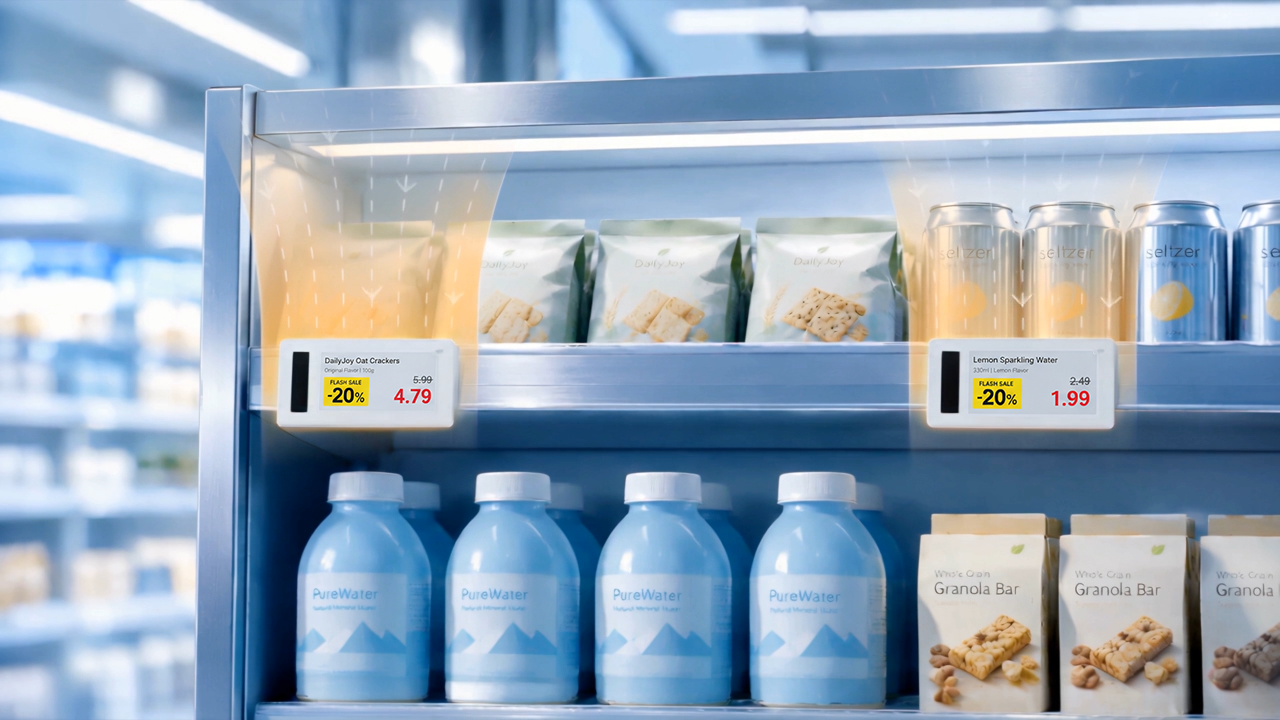
For many retailers, electronic shelf labels were first introduced for a clear and practical reason: replacing paper price tags. This is easy to understand. An electronic shelf label can help stores update items on shelves more quickly, reduce manual work (if needed) and ensure price is accurate shelf information faster, reduce repetitive manual work, and keep pricing more consistent between shelf and checkout. For large retail chains, these benefits are already significant.
But the next generation of electronic shelf label technology it is no longer just price display. Retailers are now asking a boarder question: how can shelf-edge infrastrcture help stores understand what is happening at the shelf, not just what information should be shown?
This is where Nebular Ultra becomes important within Hanshow’s smart shelf ecosystem. Nebular Ultra electronic shelf labels should not be viewed as isolated display devices. They are part of the NexShelf intelligent shelf solution, working together with AI Camera and platform capabilities to support smarter shelf visibility, item association, and Store Digital Twin applications.
In other words, the value of an ESL is expanding. It is not only about showing the right price. It is also about helping the store to be more measurable, more connected and more actionable.
The Common Misunderstanding: ESLs Are Only for Price Updates
Many retailers begin their ESL journey with a simple business case. Paper labels are slow to replace, manual price changes create errors, and promotion execution requires continuous store-level effort. ESLs help solve these problems by enabling faster, more centralized, and more consistent updates across stores.
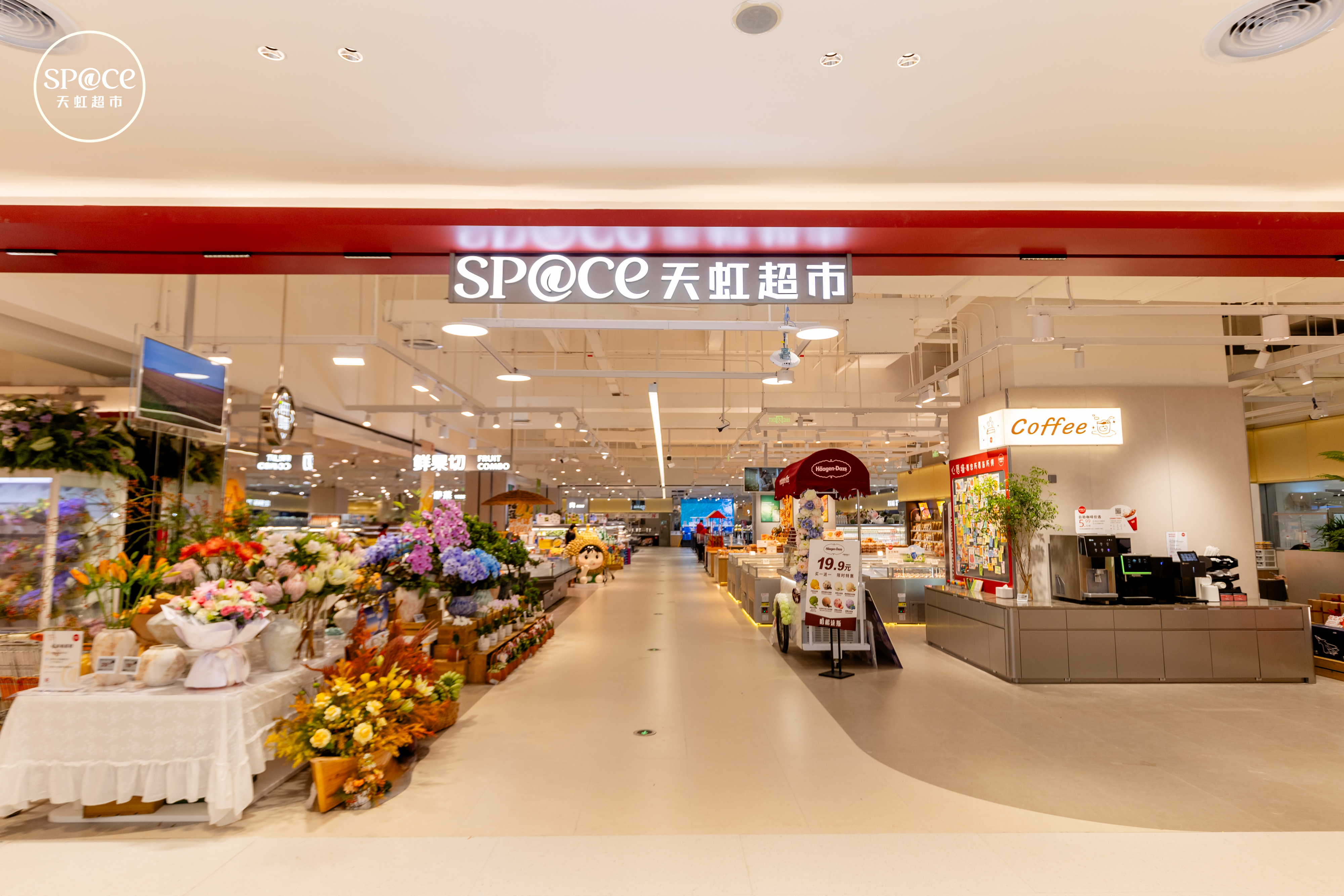
This remains one of the most practical reasons to deploy electronic shelf labels. In grocery stores, pharmacies, electronics stores, DIY stores, and hypermarkets, pricing and promotion changes can happen frequently. They may vary by time period, region, store, membership group, or channel. A connected label system helps retailers keep shelf information aligned with backend systems and reduce the risk of price mismatch.
However, if retailers only see ESLs as a price display device, they may miss the larger opportunity. The shelf is not only a place where prices are shown. It is where products are placed, promotions are executed, customers make decisions, and store teams respond to operational issues.
A basic display endpoint can show information. A connected shelf-edge infrastructure can become part of the data and execution layer of the physical store. This is the difference between price digitalization and smart shelf transformation.
What Makes Nebular Ultra Different
Nebular Ultra is Hanshow’s new generation ESL designed for the next stage of smart shelf management. Its value should be understood within the broader NexShelf solution rather than as a standalone device expect to solve every shelf intelligence challenge on its own.
Within NexShelf, Nebular Ultra contributes to shelf-edge insights, product information display, and item association workflows. Together with AI Camera and platform-level intelligence, it helps retailers build a more accurate understanding of shelf conditions.
This is an important distinction. Nebular Ultra is not simply another shelf display device. It is part of a smart shelf solution that can support capabilities such as smaller item-ESL association, shelf-level visibility, realogram generation, and store digital twin data foundation.
For retailers, this means the electronic shelf label becomes more than a display endpoint. It becomes a connected part of the shelf infrastructure.
From Manual Binding to Smarter Item Association
One of the most time-consuming steps in large-scale ESL deployment is item association. In traditional scenarios, store employees often need to scan individual product barcodes and electronic shelf label IDs to bind each label to the correct SKU. This can become especially demanding during new store openings, major category resets, or large planogram updates.
Nebular Ultra, when used within the NexShelf solution, can help simplify this process. The system can support smarter item-ESL association based on the relationship between the digital planogram, shelf position, and label deployment. This reduces repetitive manual scanning and helps stores complete shelf setup more efficiently.
For large retail chains, this is not a small improvement. Every manual step becomes more costly when repeated across thousands of SKUs and many stores. By improving the way item information, shelf location, and label deployment are connected, retailers can reduce operational friction and improve setup accuracy.
This also shows how the role of ESLs is evolving. The value is no longer limited to updating price content. The shelf label becomes part of the process that connects SKU data, location, planogram, and store execution.
Supporting Shelf Visibility and Realogram Data
Modern retail operations need to know not only what products should be on the shelf, but also what is actually happening in the store. That’s where realogram data becomes important. A planogram defines the intended shelf arrangement, while a realogram reflects the actual shelf condition.
Nebular Ultra helps support this capability as part of NexShelf. When combined with AI Camera and platform capabilities, the system can help retailers understand whether products are placed correctly, whether assigned shelf positions are occupied, and whether execution matches the plan.
This should not be interpreted as a single ESL independently delivering complete shelf intelligence. The value comes from the smart shelf solution as a whole. Connected labels, sensing devices, AI camera capabilities, and cloud platforms work together to create more reliable shelf visibility.
For retail headquarters, this means better monitoring of merchandising compliance. For store teams, it means clearer task guidance. For category managers, for instance, it means better insight into whether sales performance is connected to shelf execution.
Improving Store Tasks, Picking and Navigation
When shelf edge data is more precise, retailers can improve more than pricing. They can also improve daily store operations. Store employees spend significant time searching for products during replenishment, online order picking, and customer support.
If the system connects SKU information with shelf location more accurately, employees are able to find products more quickly and reduce unnecessary walking time.
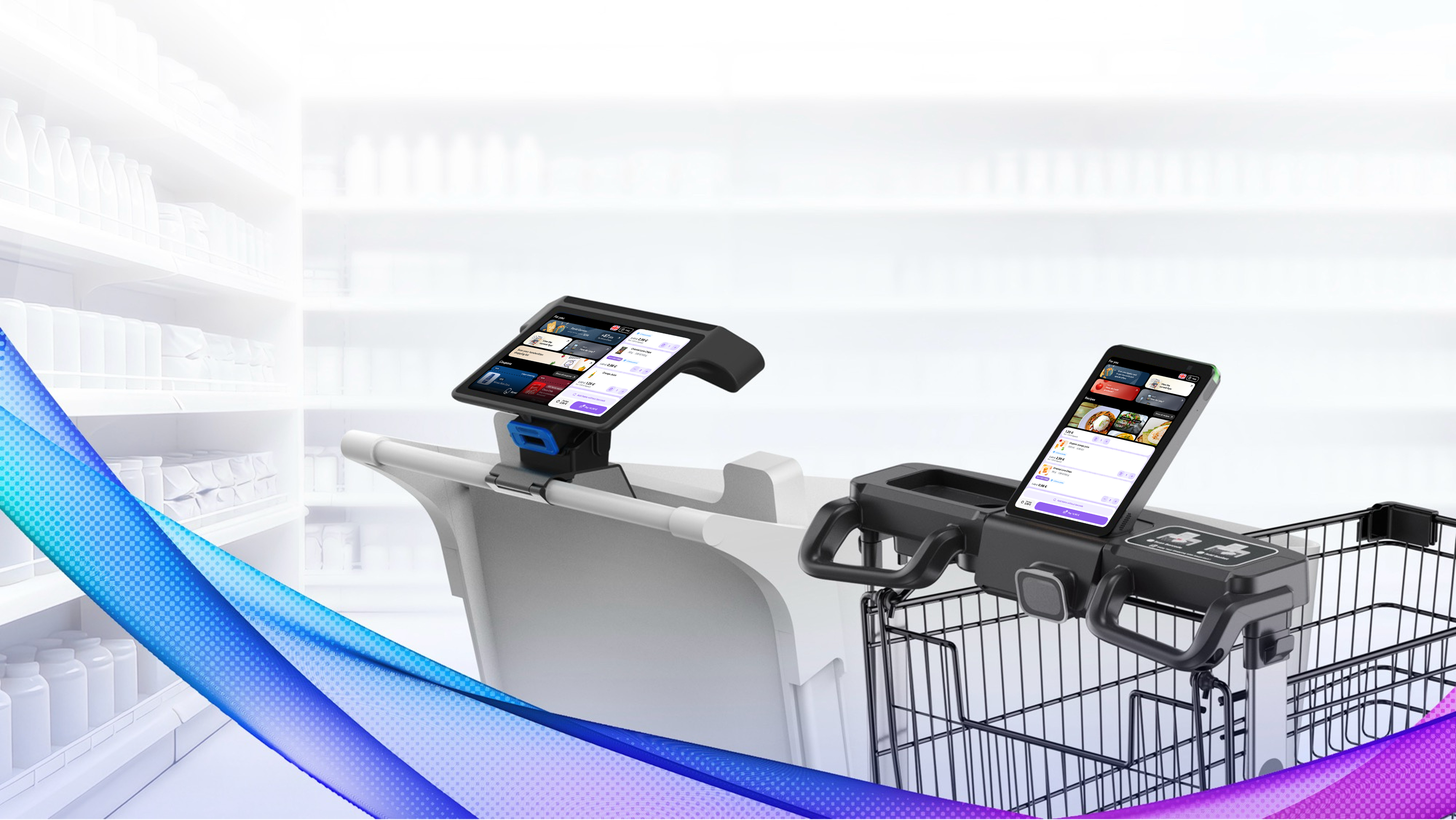
Electronic shelf labels can also support in-store guidance. When a task is assigned to a specific shelf location, the system can help direct store employees to the right area. In some scenarios, ESLs can also display operational information for staff, such as product codes, replenishment status, promotion status, or other shelf-level instructions.
For customers, better shelf data can facilitate product findability and smoother shopping journeys. When product location data can be more reliable, retailers can have more accurate navigation and search experiences and also customer service support.
That is another reason why Nebular Ultra should be understood as part of a wider smart shelf solution. The value of the electronic shelf label grows when it is connected with store workflows, rather than treated only as a display device.
Building a Foundation for Store Digital Twin
A store digital twin depends on accurate, real-time data from the physical store. If product location, shelf status, pricing, and promotion execution are not connected, the digital twin remains incomplete.
NexShelf is the foundation of Hanshow’s Store Digital Twin approach because it helps provide real-time shelf data. Nebular Ultra ESLs are an important part of that foundation, but they work within the NexShelf system rather than standing alone.
In this architecture, electronic shelf labels or digital price tags help connect shelf-edge information with cloud-based management, store operations, and digital twin applications. They support the bridge between physical shelves and digital systems.
For retailers, this foundation can support multiple future scenarios: planogram compliance, out-of-shelf detection, predictive replenishment, store navigation, supplier collaboration, and retail media. Therefore the more accurate the shelf data is, the more useful the store digital twin is.
Why This Matters For ESL Buyers
Retailers evaluating ESL should look beyond screen size, battery life, and price update speed. These are still important, but the long-term value of an ESL system depends on how well it integrates into the larger store digitalization strategy.
A retailer focused only on basic electronic shelf label display may focus mainly evaluate update efficiency and device cost. A retailer looking for smart shelf transformation should also consider item association, shelf visibility, insight integration, task workflows, and digital twin readiness.
Nebular Ultra ESLs, as part of Hanshow NexShelf, are designed for this broader future. They help retailers move from price display to smart shelf infrastructure.
This shift is significant because retail competition is becoming more operationally precise. Stores need faster execution, better visibility and lower manual complexity. The electronic shelf label is becoming one of the most important connection points between the physical shelf and the digital store system.
Conclusion
Price display remains important, but the future of electronic shelf labels is much broader. As stores become more intelligent, the shelf-edge device are becoming part of a connected execution infrastructure.
Nebular Ultra ESLs play an important role in Hanshow NexShelf by supporting more accurate shelf-edge information, item association, and storing digital twin foundation. Together with AI Camera and platform capabilities, NexShelf enables retailers to have a more accurate and actionable view of the shelf.
For retailers, this means the next generation of ESLs should not be evaluated only as digital replacements for paper price tags . They should be considered as part of a smart shelf solution that can improve pricing, execution, visibility, employee efficiency, customer experience, and long-term digital transformation.